

Nicola Wills - Counselling & Psychotherapy
Therapy Tailored To Your Needs

How many sessions will I need?
I work in an open ended way with clients. How many sessions you need will be dictated by how helpful you feel the sessions are. Often, clients know when it feels like the right time to end is, and we can discuss this in the first initial sessions together.
What I can generally recommend is, where possible, we start with 3 sessions of regular weekly appointments to establish our working relationship, goals and the right approach for you. After which we can work together weekly, fortnightly or ad-hoc depending on your circumstances and needs.
From my experience supporting individuals, I believe there is a wide variation in:
Levels of support people need
How circumstances may effect them
How people communicate and process
How they build working and trusting relationships.
What’s important to me is that you feel comfortable, safe and supported in our sessions and that there is space for us to meet wherever feels helpful in that moment, however many sessions that takes.
Individual therapy looks different for every person because it is tailored to you. If you are looking for a space that can adapt with your needs, I may be able to support you as an Integrative Psychotherapist. I intentionally chose an integrative way of working because I believe it offers the best possible support to my clients, blending and combining lots of different ways of approaching an issue so that you get the best support possible.
Whether you’re new to Counselling or have tried it but felt it wasn’t helpful, an integrative model may able to support you because its:
Holistic - it aims to consider the whole person, including their relationships and support structures
Flexible and adaptable to individual needs, not one size fits all
Evidence-based - both using proven techniques and what is proven to work for you individually. If it’s evident something isn’t working for you we can shift to another technique that might fit better.
I aim to blend elements of psychodynamic therapy, DBT and relational approaches, with an emphasis on our relationship, self-awareness and the impact of trauma.
I also work with couples, and can support you to understand your own patterns of relating and improve intimacy and connection in your relationships.
What will sessions look like?
The short answer is: Your needs will inform what our future sessions look like, based on our initial consultation and first few sessions together.
In our introductory call, we will discuss what you would like to be different and explore some of the approaches I can utilise to support you to meet your goals. Below is an explanation of some of the different approaches I regularly use to support clients.
After this, our first 2/3 sessions will help me learn a bit more about you and what you would like to achieve as a first step. We will work to make that as specific and achievable as possible. From then we will periodically measure if you feel the sessions are supporting you in your goals with regular reviews.

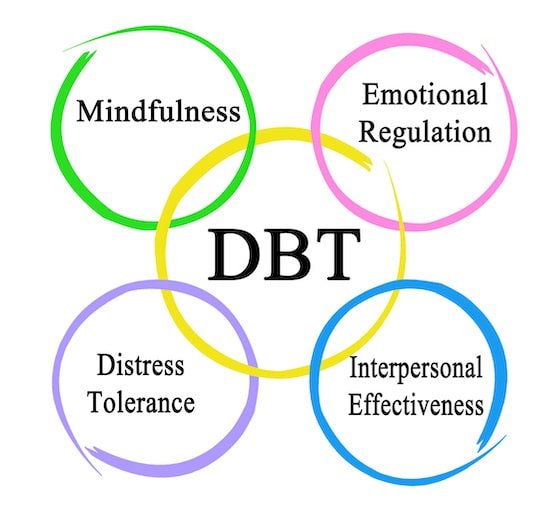
Dialectical Behaviour Therapy
I aim to blend helpful elements from methods and skills used in DBT to support you. A DBT-informed approach aims to help you:
Understand how your “difficult” feelings work
Build awareness of current emotions
Learn really practical skills to manage these feelings in the moment, and long term
Develop a dialectical approach to life, helping you accept reality and more towards your goals effectively.
This is great for supporting with understanding emotions, emotional overwhelm, managing problematic behaviour or compulsions, anxiety/depression. I also have found it is a good balance of structure and autonomy, which is perfect for neurodivergent clients supporting them to unmask and feel that they have tools to move towards their life goals.
Things to consider:
The approach in DBT relies on us working together to find strategies that work for the individual. Because of this, there is usually homework set and the effectiveness of the therapy depends greatly on the client having space and time to practice skills in their everyday lives outside of sessions, which some other styles of therapy do not utilise.
Therapy Approaches
Psychodynamic
This approach helps us understand how unconscious processes and foundational experiences from the past impact the present. You are encouraged to talk freely and openly about your experiences and relationships. This can help you understand what you’re feeling now, why you behave in a certain way and how this affects your relationships.
Key focus areas:
Understanding how early relationships and experiences still echo within our present and inform our emotional state and decision-making
Building an understanding of how different parts of ourselves collide and cause tensions
Uncovering, understanding and resolving internal conflicts
Understanding defence mechanisms, to safely face reality.
Relational
At the heart of my work is always the relationship between us. A relational approach seeks to use the relationship between counsellor and client as a tool to understand connection, vulnerability and safety with another person. Being able to be present and feel safe with another can be helpful if you struggle with anxiety, feeling safe around others, relational trauma or unhelpful attachment patterns.
Key focus areas:
Working experientially to uncover core beliefs and fears around being in connection with others
Noticing dynamics within relationships, such as scripts, power, transference
Feeling safe in relationship and vulnerability.
Trauma-Informed
Awareness of trauma is a foundational part of my practice and an area I continue to focus on in my professional development. It focuses both on the psychological elements of how we make sense of an organise what happened to you, as well as the somatic elements of safety and trust.
What you are experiencing could be from a single event or a series of events, the trauma response doesn’t distinguish. We will work together to understand its impact on you.
Key focus areas:
Understanding your bodies response and working to feel safer
You don’t have to remember the event in perfect detail. We will work with whatever is left with you from what has happened to you
We will work in a holistic way, to take into account what happened and in what context, and how it’s impacting you.
Get In Touch
I offer every new client a free consultation call to explore your needs to ensure I am the right practitioner for you. There is no obligation to book regular therapy sessions after that call.
-
"We are wounded in relationships, and we heal through relationships.”
- Dr. Gabor Maté